A Brief Introduction of Electrical Resistivity Tomography (ERT)
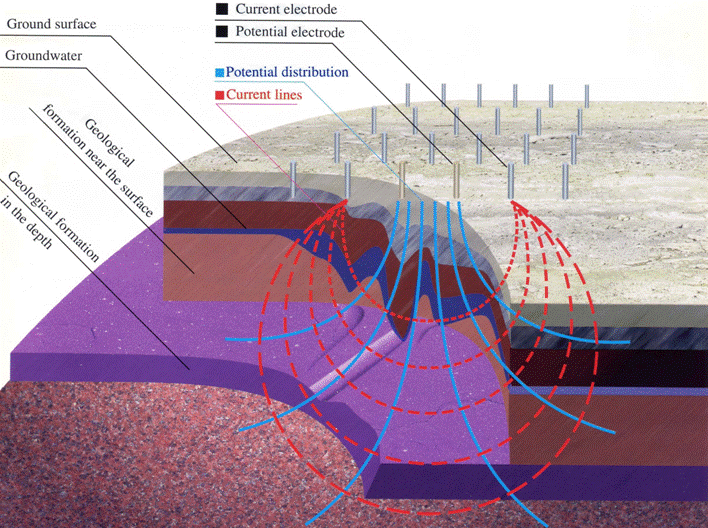
1.The basic concept of ERT
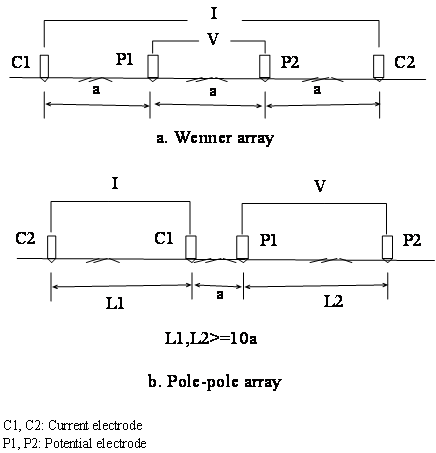
2.The electrode arrays and measurement patterns usually used in ERT
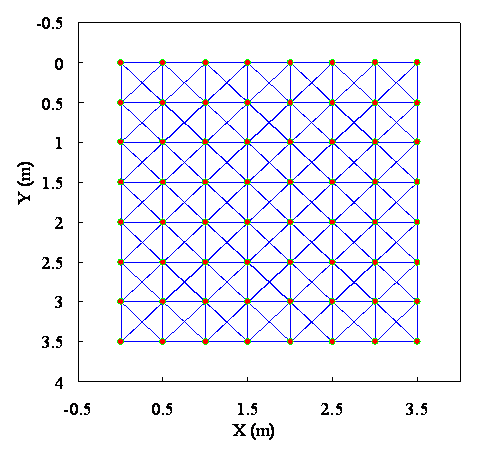
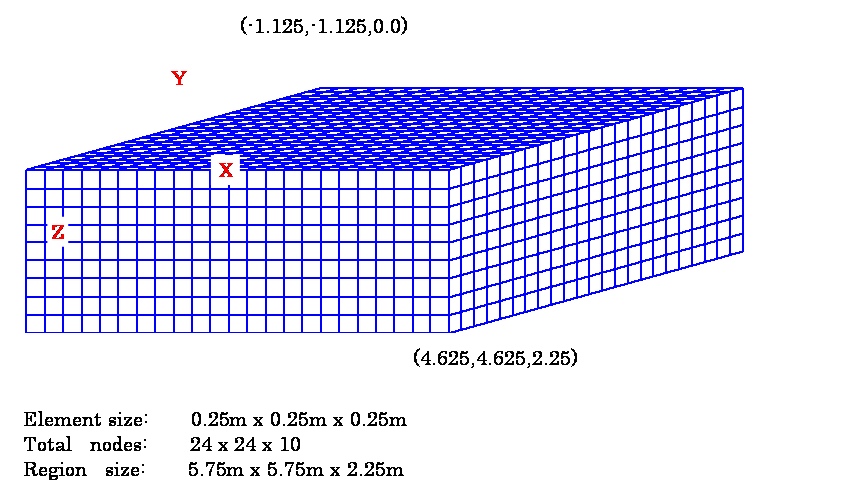
3.The division scheme used in the ERT finite element calculation
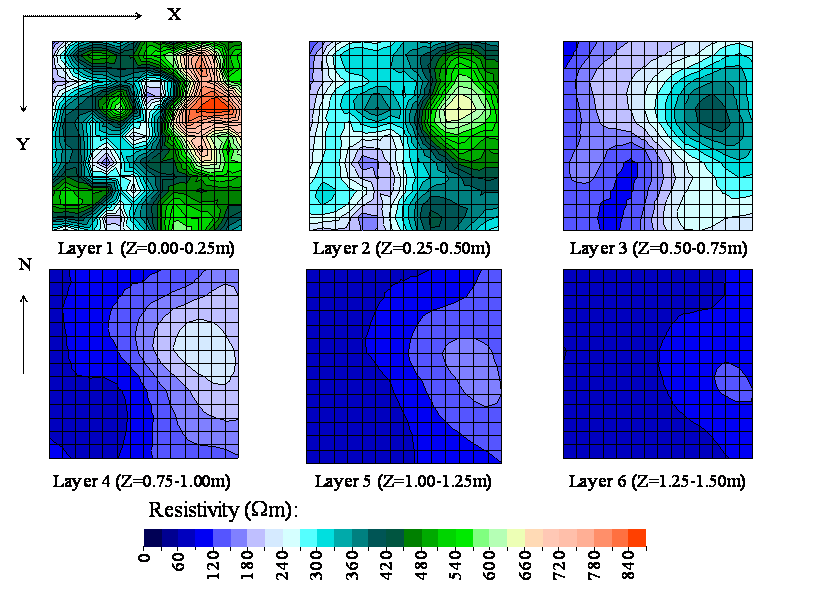
4.The inversed 3-D soil resistivity distribution expressed by six 2-D layers
5.The advantages of ERT
- It can be used in three-dimensional space.
- It can be used in different scales, both in the laboratory and in the field.
- Temporal monitoring is especially effective.
- It reflects the electrical property of material that is physically meaningful, and unique as compared with tomography with X-ray, seismic wave and GPR.
- It can be used to investigate chemical, physical, and even biological processes where there is electrical property difference.
6.A new tool for scientific observation
- Material resistivity is closely related with the material matrix structure, component, water saturation, solute concentration and temperature.
- Any change of these factors would result in corresponding variations in the material resistivity.
- Since various physical and chemical processes happening in the material would unavoidably result in the changes in one or several of the factors, thus by monitoring the material resistivity changes we can indirectly investigate these processes.
7.It is not a simple work
8.Suggested further readings
- Zhou, Q. Y., J. Shimada, A. Sato, Three-dimensional soil resistivity inversion using patching method, Journal of the Japan Society of Engineering Geology, 39(6), 524-532, 1999.PDF
- Zhou, Q. Y., Three-dimensional vadose zone hydrology based on high-density electrical resistivity tomography, Hydrogeology and Engineering Geology, 30(6), 97-104, 2003 (in Chinese).PDF
- Zhou, Q. Y., A study on three-dimensional spatial and temporal variability of soil moisture by using electrical resistivity tomography, the Ph.D. degree dissertation, University of Tsukuba, Japan, 1999.